
Claude Code Terminal User Guide
Claude Code is a programming agent launched by Anthropic. In addition to the VS Code extension, it also provides a terminal CLI, allowing you to run claude in any project directory to read code, modify files, run commands, explain errors, and assist in completing development tasks.
This article explains how to install, configure, and use the Claude Code CLI in the local terminal through the Claude Code proxy service of WorldAi. Once configured, Claude Code will send requests to https://api.worldai.chat, without needing a separate subscription to the official Anthropic account.
¶ Application Process
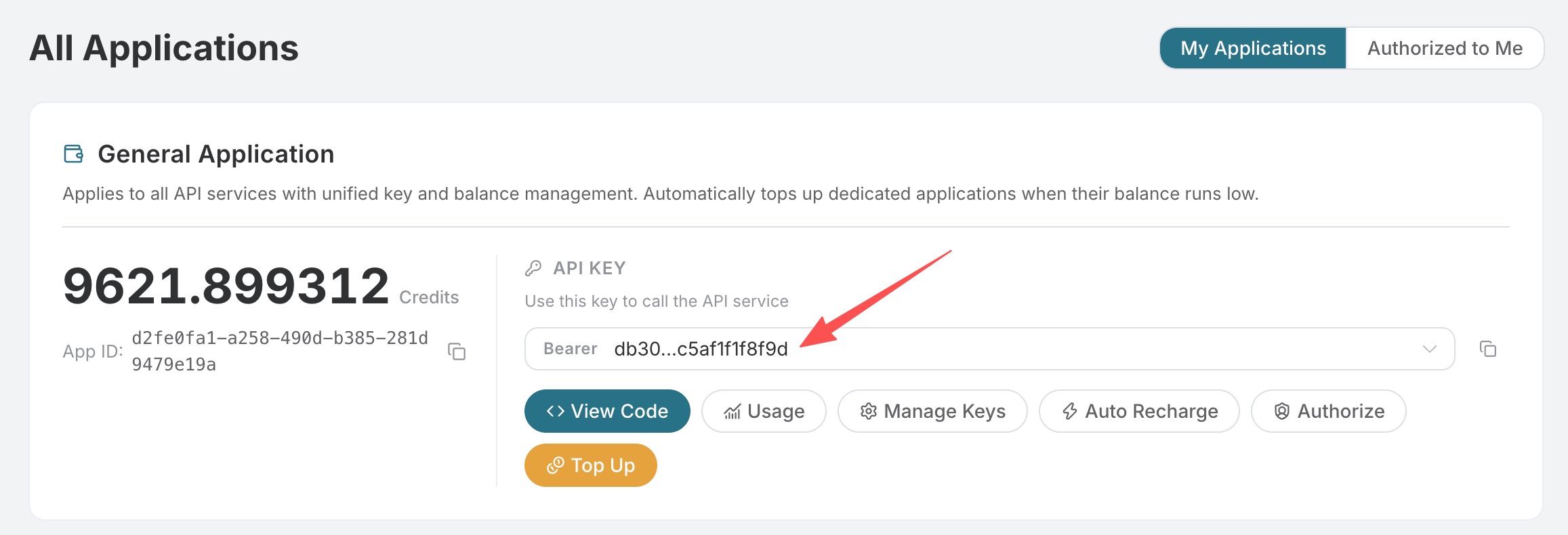
To use Claude Code, you can first go to the WorldAi Console to obtain your API Token for backup.

If you are not logged in or registered, you will be automatically redirected to the login page inviting you to register and log in. After logging in or registering, you will be automatically returned to the current page.
There is a free quota available for first-time applicants, allowing you to experience Claude Code services for free.
¶ Installing Claude Code
Claude Code supports macOS, Linux, Windows, and WSL. You can use the official native installation method or install it via npm.
¶ Native Installation (Recommended)
The official native installation method will install the claude command and automatically handle subsequent updates.
macOS, Linux, WSL can run:
curl -fsSL https://claude.ai/install.sh | bash
Windows PowerShell can run:
irm https://claude.ai/install.ps1 | iex
Windows CMD can run:
curl -fsSL https://claude.ai/install.cmd -o install.cmd && install.cmd && del install.cmd
¶ npm Installation
If you have already installed Node.js, you can also install Claude Code via npm. This method requires Node.js version 18 or higher.
npm install -g @anthropic-ai/claude-code
¶ Check Installation
After installation, reopen the terminal and check if the command is available:
claude --version
If you see command not found, it usually means the current terminal has not loaded the new PATH yet. Please close and reopen the terminal, or check the PATH configuration indicated in the installation script output.
¶ Configuration
After installation, Claude Code will attempt to connect to the official Anthropic service by default. To switch to WorldAi, you need to configure Claude Code to use our proxy address and the API Token you just obtained.
¶ Method 1: Shell Configuration File
It is recommended to write the configuration into a Shell configuration file, such as ~/.zshrc, ~/.bashrc, or ~/.bash_profile:
export ACEDATACLOUD_API_TOKEN="{token}"
export ANTHROPIC_BASE_URL="https://api.worldai.chat"
export ANTHROPIC_AUTH_TOKEN="$ACEDATACLOUD_API_TOKEN"
export CLAUDE_CODE_AUTO_COMPACT_WINDOW="850000"
Replace {token} with the API Token you copied from the WorldAi Console. CLAUDE_CODE_AUTO_COMPACT_WINDOW sets the trigger window for automatic compression to about 850,000 tokens, reserving space for tool results and final answers; it will not modify the model's context limit.
After configuring, reopen the terminal or execute the corresponding source command to make the configuration take effect immediately:
source ~/.zshrc
This method is suitable for scenarios where you want all projects to default to using WorldAi.
¶ Method 2: Project Settings File
If you only want a specific project to use WorldAi, you can create a .claude/settings.local.json file in the project root directory:
{
"env": {
"ANTHROPIC_AUTH_TOKEN": "{token}",
"ANTHROPIC_BASE_URL": "https://api.worldai.chat",
"CLAUDE_CODE_AUTO_COMPACT_WINDOW": "850000"
}
}
If the current Shell or system environment has an old ANTHROPIC_API_KEY set, please unset it in the same environment where you start Claude Code / VS Code:
unset ANTHROPIC_API_KEY
Do not place the real Token in the team-shared .claude/settings.json; personal credentials should only be in the ignored .claude/settings.local.json or local environment variables.
This method only takes effect for the current project. It is also applicable to both the terminal CLI and the Claude Code VS Code extension: when you open the same project in VS Code, the extension will also read this project-level configuration.
It is recommended to add .claude/settings.local.json to .gitignore to avoid committing personal Tokens to the remote repository. After configuration, please reopen the terminal; if using in VS Code, please restart or reload VS Code.
Note: If there is an old
ANTHROPIC_API_KEY, it should be trulyunset, rather than writing an empty string in the configuration. After cleaning, you need to restart Claude Code; the VS Code extension also needs to fully reload the window.
¶ Clear Cached Anthropic Login
If you have previously logged into Claude Code with an official Anthropic account, the local system may have cached the official login status. It is recommended to clear the old login before switching to the WorldAi proxy.
Start Claude Code:
claude
In the Claude Code interactive interface, enter:
/logout
After logging out of Claude Code, reopen the terminal and run claude again. If you have never logged into the official Anthropic account, you can skip this step.
¶ Start Session
Navigate to your project directory and then start Claude Code:
cd /path/to/your/project
claude
Once you see the Claude Code interactive interface, you can directly input requests, such as:
Explain the directory structure of this project
You can also use a one-time command to have Claude Code complete a single task:
claude "Help me check the recent git diff for possible bugs"
If you want Claude Code to output results and then exit directly, you can use -p:
claude -p "Summarize the purpose of README.md"
¶ Verify Configuration
Once in Claude Code, you can enter /status to check the current connection configuration:
/status
You should see information similar to:
Auth token: ANTHROPIC_AUTH_TOKEN
Anthropic base URL: https://api.worldai.chat
As shown in the image:

If the Anthropic base URL is not https://api.worldai.chat, it indicates that the current terminal has not read the correct configuration. Please check if the Shell configuration file has been saved successfully and reopen the terminal.
You can also check the request records and billing details through the WorldAi Console - Usage History and view the remaining quota through the WorldAi Console - Application List.
¶ How It Works
Claude Code natively uses the Anthropic Messages API protocol. WorldAi provides a proxy service compatible with the Anthropic API at https://api.worldai.chat, so Claude Code does not require a local proxy program or additional plugins.
The workflow is as follows:
- Claude Code reads
ANTHROPIC_BASE_URLandANTHROPIC_AUTH_TOKENfrom environment variables or.claude/settings.local.json. - When
ANTHROPIC_BASE_URLpoints tohttps://api.worldai.chat, requests are sent directly to WorldAi. - WorldAi uses your API Token for authentication, checks the quota, and forwards the request to an available Claude Code service channel.
- After the request is completed, the platform records usage based on actual consumption and deducts from the quota.
This means you still use the original claude command and the native interaction experience of Claude Code, just switching the underlying API service to WorldAi.
¶ Configure Models
Claude Code selects different levels of models based on the task type. You can also specify the default model through environment variables.
For example, you can add the following to your Shell configuration file:
export ANTHROPIC_DEFAULT_OPUS_MODEL="claude-opus-4-8"
export ANTHROPIC_DEFAULT_SONNET_MODEL="claude-sonnet-4-6"
export ANTHROPIC_DEFAULT_HAIKU_MODEL="claude-haiku-4-5-20251001"
export CLAUDE_CODE_SUBAGENT_MODEL="claude-sonnet-4-6"
Common variable descriptions are as follows:
| Variable | Purpose |
|---|---|
ANTHROPIC_DEFAULT_OPUS_MODEL |
Model for complex reasoning, planning, and high-difficulty coding tasks |
ANTHROPIC_DEFAULT_SONNET_MODEL |
Model for everyday coding, reading code, and routine modification tasks |
ANTHROPIC_DEFAULT_HAIKU_MODEL |
Model for faster, lighter tasks |
CLAUDE_CODE_SUBAGENT_MODEL |
Model used by Claude Code when creating sub Agents |
If you are unsure how to choose, you can skip configuring these model variables and use the default selection by Claude Code. If you later wish to consistently use a specific model, configure it according to the model names supported in the WorldAi Claude service documentation.
Note: Claude Code has the best compatibility with the Claude series models. It is recommended to prioritize using the Claude models provided by WorldAi and not to switch to non-Claude models arbitrarily.